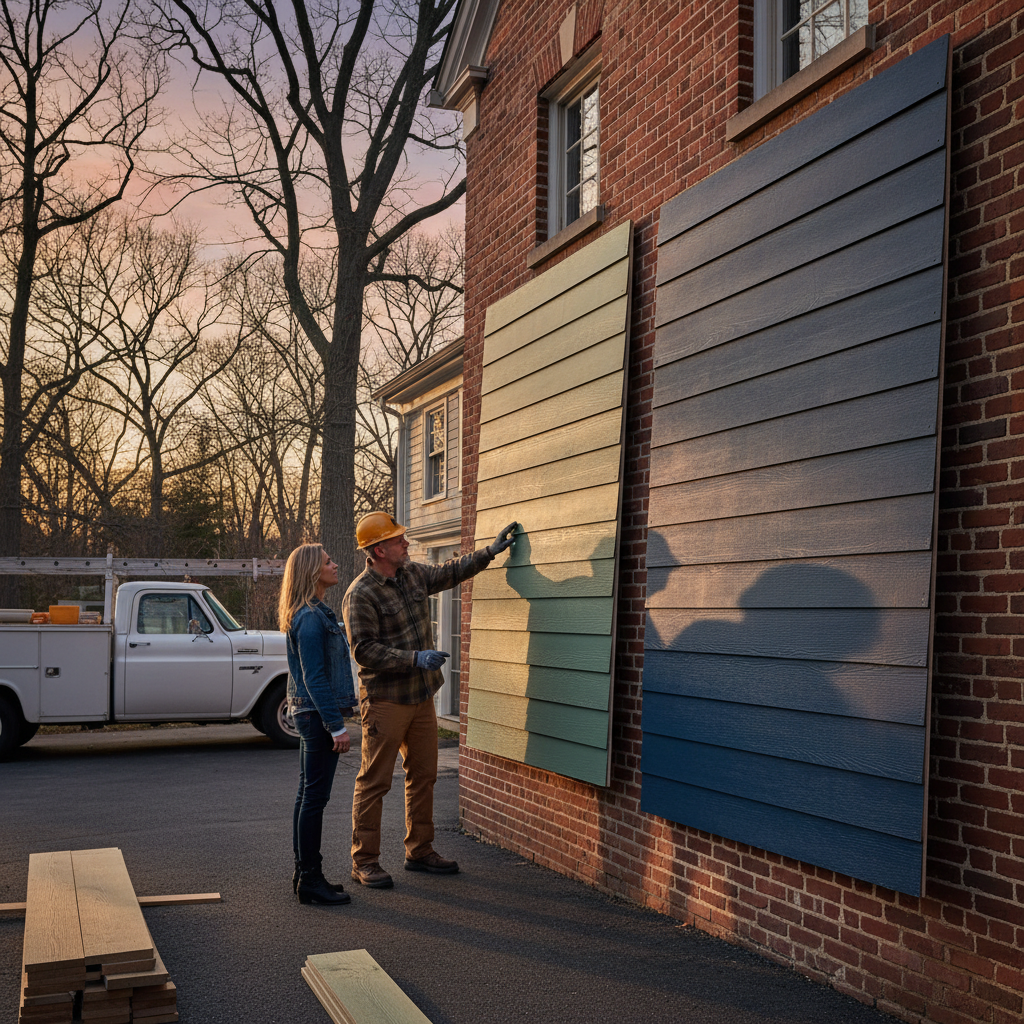
Choosing Between Vinyl and Fiber Cement Siding: What’s Best for Your Home?
Visualize Your Project Before You Build
Upload a photo of your home and see AI-powered renovation concepts instantly. No commitment required.
Introduction
When it comes to siding your home, the decision between vinyl siding and fiber cement siding can significantly impact your home’s appearance, durability, and value. Each material offers unique advantages and disadvantages, making it crucial to understand which option suits your needs best. In this guide, we’ll explore the pros and cons of each type of siding to help you make an informed choice for your home.
Understanding Vinyl Siding
Vinyl siding is a popular choice among homeowners due to its affordability and low maintenance requirements. Here are some key points to consider:
- Cost-Effective: Vinyl siding is generally less expensive to install than fiber cement, making it ideal for homeowners on a budget.
- Variety of Styles: Available in numerous colors and styles, vinyl siding can mimic the look of wood or other materials without the upkeep.
- Low Maintenance: It doesn’t require painting or staining, and basic cleaning with soap and water is often sufficient.
- Pest Resistant: Vinyl does not attract pests like termites, reducing potential damage.
However, vinyl siding also has some drawbacks:
- Durability Issues: While it withstands normal weather, extreme temperatures or impacts can cause it to crack or fade over time.
- Environmental Concerns: Made from PVC, vinyl siding is less environmentally friendly and can be difficult to recycle.
The Benefits of Fiber Cement Siding
Fiber cement siding, particularly James Hardie products, presents a more robust alternative with several advantages:
- Exceptional Durability: Resistant to rot, termites, and fire, fiber cement can withstand severe weather, making it ideal for Greater Boston’s climate.
- Long Lifespan: This siding can last 50 years or more with proper upkeep, reducing the need for replacement.
- Versatile Appearance: Fiber cement siding comes in various styles, colors, and textures, providing a higher-end aesthetic that can boost your home’s curb appeal.
- Eco-Friendly Options: Made from sustainable materials, fiber cement is a greener choice compared to vinyl.
Yet, fiber cement siding has its disadvantages as well:
- Higher Initial Cost: The material and installation costs can be more expensive than vinyl siding, though the long-term benefits may justify the investment.
- More Maintenance Required: Fiber cement may need painting every 10 to 15 years, depending on the conditions.
Making the Right Choice for Your Home
When weighing your options between vinyl siding and fiber cement siding, consider these factors:
- Your budget
- The local climate and weather conditions
- The desired aesthetic for your home
- Long-term maintenance and durability
If you’re planning a home addition or simply upgrading your existing siding, the experienced team at Coen Construction can provide you with expert advice tailored to your specific needs.
Conclusion
Ultimately, the choice between vinyl siding and fiber cement siding depends on your personal preferences and your home’s requirements. While vinyl offers affordability and low maintenance, fiber cement provides unparalleled durability and aesthetic appeal. Whichever you choose, ensure it’s installed by skilled professionals to maximize your investment.
For a quality installation and to explore your siding options further, contact Coen Construction today for a free consultation.
Free Estimate
No obligation. Respond within 1 day.
Customer Reviews
"My rear porch needed structural and cosmetic improvements. His crew showed up early. Whenever an issue arose, it was resolved without impacting the budget. They do quality work in a timely manner."
Serving 65+ Communities Across 3 Regions
From Cambridge to Plymouth — Greater Boston, Metro West, and the South Shore. View all service areas →
Greater Boston
17 townsBoston's inner cities and neighborhoods — from Cambridge to Hyde Park.
All Greater Boston communitiesMetro West
22 townsThe western suburbs stretching from the Charles River to the Sudbury Valley.
All Metro West communities